Setting the right price for your notary services is crucial for running a successful and sustainable business. As a notary, your pricing structure should not only reflect the value of your time and expertise but also comply with state regulations. From administrative fees to travel expenses and per-stamp charges, understanding how to calculate and communicate your fees ensures transparency and professionalism. In this guide, we’ll walk you through the key components of notary pricing and provide practical tips to help you create a fair and competitive rate. Please check with your state regulations regarding what and how much you are allowed to charge.
Pricing for general notary services should consider the following factors:
- Administration Fee: Charge a flat fee for tasks such as scheduling, record-keeping, and client communication. For instance, a reasonable administration fee could be $10-$25, depending on the complexity of your process.
- Per-Stamp Fee: Each state regulates how much a notary can charge per notarized signature or stamp. Research the maximum allowable fee for your state. For example:
- California: $15 per notarized signature
- Texas: $6 per notarized signature
- Florida $10 per notarized signature
- Georgia $2 per notarized signature
- Travel Fees: In most states, you can charge a travel fee in addition to your per-stamp fee. Be sure this is agreed upon before the appointment. For example, the travel fee is .70 per mile. (Per IRS.Gov this increase began Jan 1, 2025)
Here’s a sample breakdown for a general notary service in a state like California:
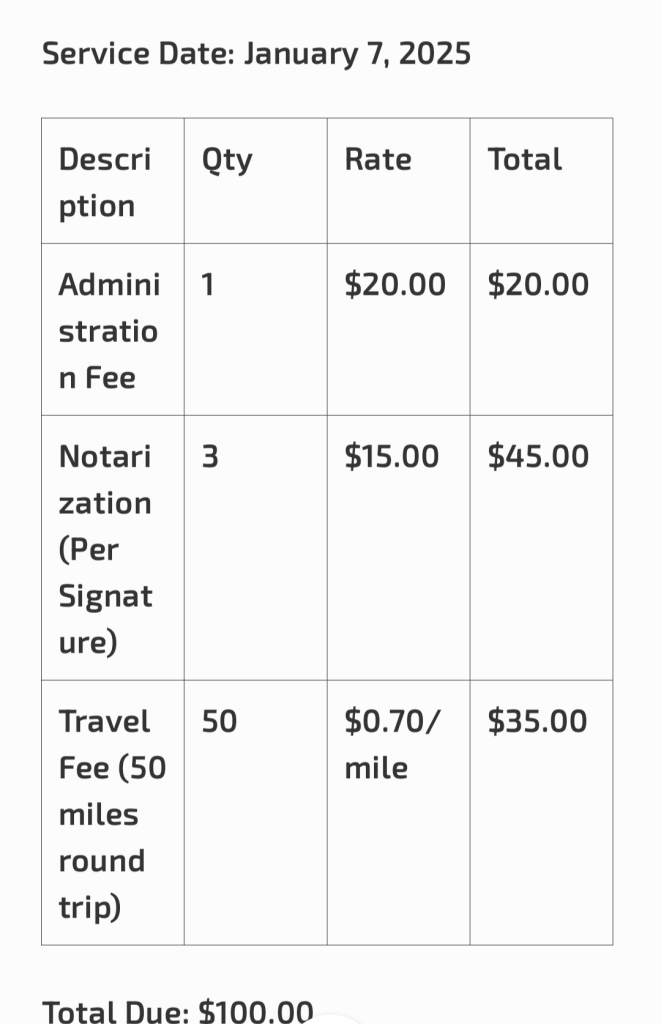
This format ensure clarity and professionalism while detailing the costs for your clients’. Adjust rates according to your state laws and specific business policies. And it would not hurt to use Canva to create a more professional and branded invoice form to provide for your clients.
 Beyond the Notary Seal